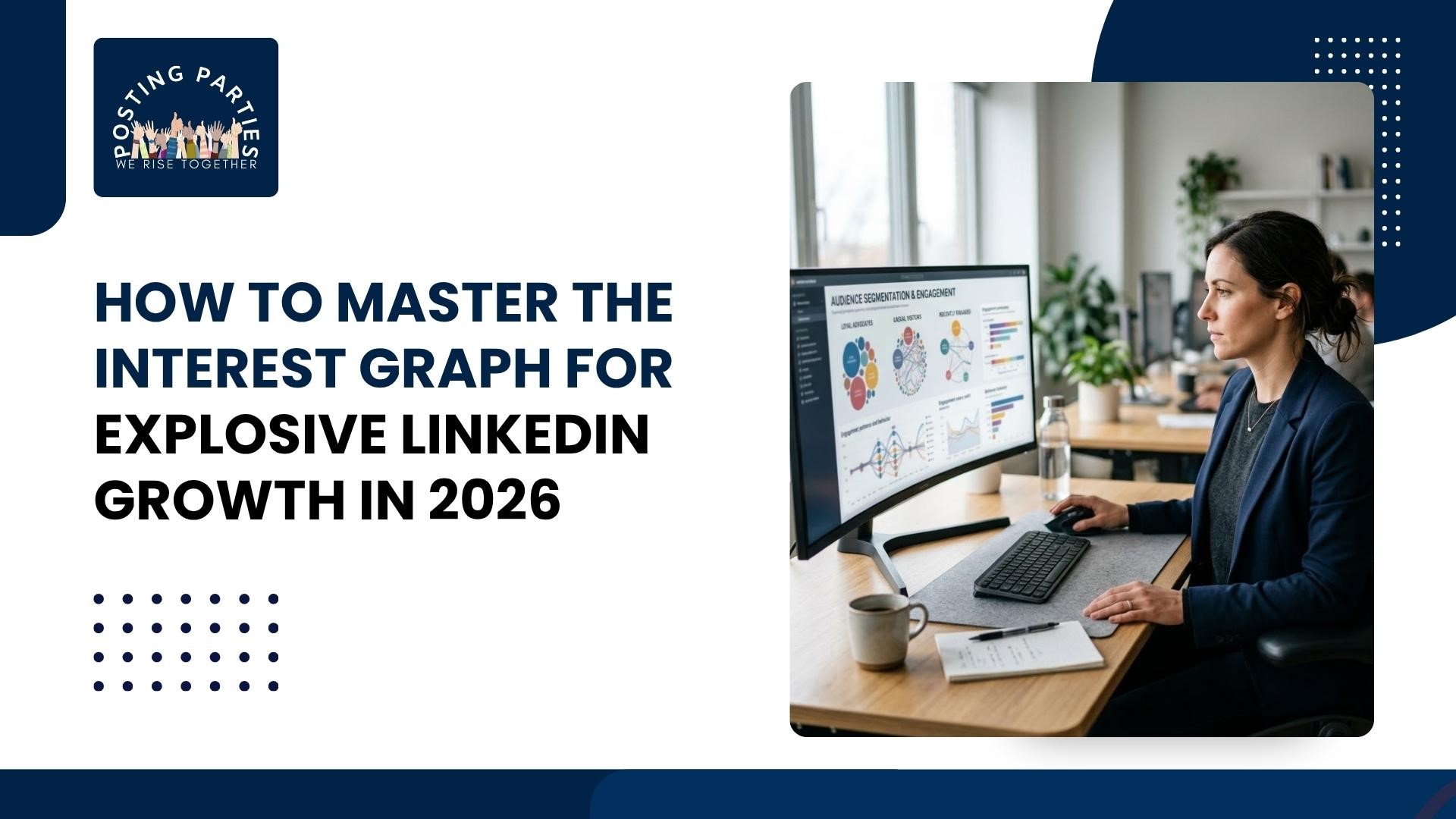
How to Master the Interest Graph for Explosive LinkedIn Growth in 2026
By 2026, LinkedIn's growth will have evolved from a "who you know" social graph into a "what you know" interest graph. The current algorithm functions as a topical routing engine, scanning your text to deliver insights directly to relevant users based on their specific professional needs, effectively making your follower count secondary to your content's relevance.
In the fast-moving world of B2B business, standing still is the same as moving backward. By April 2026, LinkedIn had grown into a massive network of over 1.2 billion professionals. For any modern brand, it is no longer just a place to host a digital resume. It is the primary engine for growth. However, many companies are still using a 2022 playbook in a 2026 world. They post generic updates and wonder why their reach is hitting a brick wall.
The truth is that the platform has shifted from a "Social Graph" to an "Interest Graph." This means the algorithm no longer cares just about who you know; it cares about what you know and how much value you provide. To win today, you need a robust LinkedIn marketing strategy that balances human connection with technical precision. Whether you are a solo founder or a team lead, these LinkedIn marketing tips will help you turn your profile into a lead-generation machine.
Why Most Strategies Still Fail in LinkedIn Modern Feeds?
Imagine a marketing manager named Sarah. She spends four hours writing a deep-dive report on industry trends. She posts it on Monday morning. Two hours later, it has three likes and zero comments. This is a classic example of "Content Friction." Sarah’s post failed because it didn't trigger the "First-Hour Velocity" that the 2026 algorithm demands.
Most businesses fail because they treat LinkedIn like a megaphone rather than a round table. They use LinkedIn marketing for b2b to talk at people instead of talking with them. Recent data shows that 62% of B2B marketers successfully generate leads here, but the top 5%, the ones getting the 2x higher conversion rates, are using specific LinkedIn marketing techniques to bypass the "Ghost Town" effect.
1. Building a Foundation with LinkedIn Content Marketing
Your content is the "handshake" of your digital brand. In 2026, the most successful format is the Native Document. These are PDF carousels that users can click through without leaving the feed. Why do they work? Because they increase "Dwell Time." The longer a user stays on your post, the more the algorithm thinks your content is valuable.
When developing your LinkedIn content marketing plan, follow the 3-2-1 Rule. This is a simple but powerful framework:
3: Engage with three posts from industry leaders in your niche.
2: Leave two thoughtful, long-form comments (at least 15 words) on relevant threads.
1: Post one high-value piece of original content.
By giving value to others first, you build "Social Capital." When you finally post your own update, the people you engaged with are more likely to see it and interact with it. This is one of the most effective maximizing LinkedIn engagement strategies available today.
2. Optimizing for the 360Brew AI Algorithm
The newest update to the platform is the 360Brew AI. This system performs a "Semantic Audit" on every post. It looks at your LinkedIn marketing campaign and asks: "Does this person actually know what they are talking about?"
To satisfy the AI, you must use LinkedIn best practices for businesses. This includes verifying your profile and ensuring your "Topic DNA" is consistent. If you are a cybersecurity expert, don't post about your lunch or general productivity hacks. Stick to your niche. The AI rewards "Vertical Authority." When you stay in your lane, your reach to a specific, high-intent create linkedin audience grows exponentially.
3. The Power of Employee Advocacy
One of the biggest shifts in 2026 is that people trust people more than they trust logos. A post from a CEO or a Senior Engineer will get 10x more reach than a post from a Company Page. This is why using LinkedIn for marketing effectively requires an employee advocacy program.
Encourage your team to share their "Behind-the-Scenes" stories. When an employee shares a company update with their own personal take, it humanizes the brand. This is a core part of using LinkedIn for b2b marketing. It moves the conversation from "Business-to-Business" to "Human-to-Human." High-growth companies are now training their staff on LinkedIn marketing techniques to ensure everyone is a brand ambassador.
4. Strategic Timing: When to Hit the Feed
Timing is a science, not a guess. According to current 2026 engagement heatmaps, the "Golden Window" for B2B engagement has shifted later in the day.
Tuesdays: 11:00 AM – 5:00 PM
Wednesdays: 11:00 AM – 4:00 PM
Thursdays: 1:00 PM – 5:00 PM
Avoid Monday mornings. People are too busy clearing their inboxes to care about your LinkedIn marketing tips. Instead, aim for the mid-week "Reflection Period." This is when professionals are looking for new ideas and solutions to the problems they’ve faced during the week.
5. Using LinkedIn Marketing Solutions for Paid Growth
While organic reach builds trust, LinkedIn marketing solutions (paid ads) provide the speed. A common mistake is starting a paid campaign before you have organic traction. In 2026, the "Organic-First" model is the winner.
Find a post that is already performing well organically and then "Boost" it. This ensures you are putting money behind a message that has already been validated by a real audience. This significantly lowers your cost-per-lead, which is currently 28% lower than Google AdWords for B2B niches.
6. Advanced Networking and Direct Outreach
Marketing isn't just about what you post; it's about who you talk to. LinkedIn marketing for b2b thrives on high-quality messaging. Avoid the "Pitch Slap", sending a sales message the moment someone accepts your request.
Instead, use LinkedIn marketing techniques like "The Bridge." Mention a specific point from a post they recently shared. Ask a question that proves you read their content. This builds a real relationship. Remember, the goal of a LinkedIn marketing strategy is to move the conversation off the platform and into a discovery call.
7. Measuring What Matters: Metrics in 2026
Stop looking at Likes. In the current era, Likes are a vanity metric. To truly understand your ROI, you must track Saves and Shares via DM. These actions signal "High Utility." If someone saves your post, it means they want to refer back to it as a resource. If they share it in a DM, they are recommending you to a colleague. These are the metrics that lead to actual revenue.
The Strategic Bridge to Consistency in LinkedIn Marketing
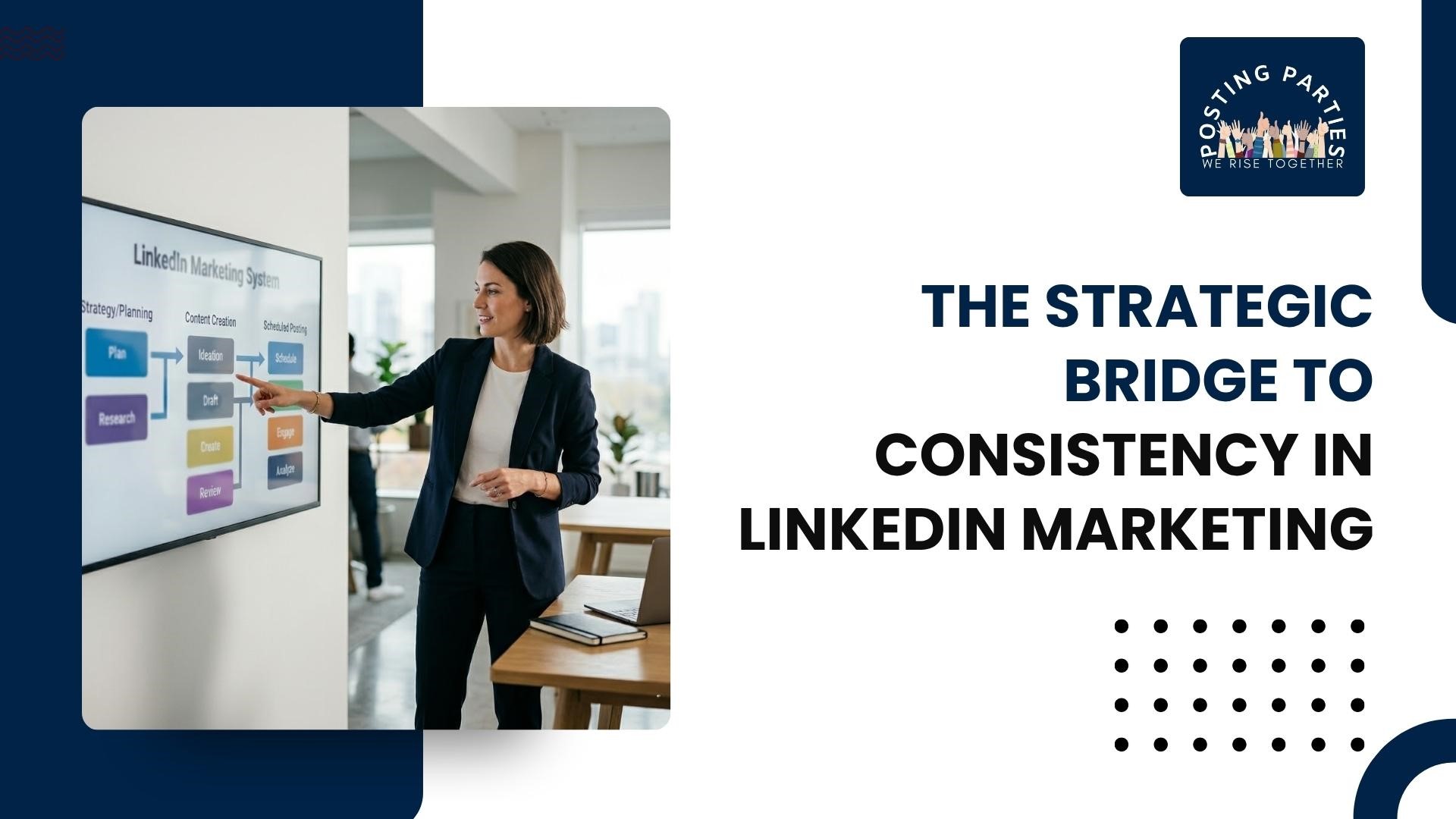
Building a brand on LinkedIn takes time, but most people quit right before the breakthrough. The "Friction" of daily posting can be overwhelming for a busy executive. This is why having a system is better than having "motivation."
The transition from being a passive observer to an industry leader requires a logical leap in how you handle engagement. If you are struggling to get those first few critical comments that trigger the algorithm, you need a way to prove your relevance to the Interest Graph.
This is where specialized tools and networks come in. A service like Posting Parties acts as the "Social Proof" engine your brand needs. By ensuring your high-value LinkedIn content marketing is met with immediate, expert-level discussion, you bypass the "First-Hour Velocity" gate. It’s the difference between shouting into a void and leading a crowded room.
What to Expect From LinkedIn in 2027?
As we look toward the next 12 to 24 months, we expect the platform to become even more focused on Video Content. Vertical, "TikTok-style" professional videos are already seeing a 40% higher engagement rate than static images. If you haven't started filming short, 60-second LinkedIn marketing tips, now is the time to start.
The AI will also become more aggressive at filtering out "AI-generated fluff." Authenticity will be the only currency that matters. Brands that use their LinkedIn marketing strategy to show real people solving real problems will be the ones that dominate the 2027 feed.
What are the first steps in LinkedIn Marketing?
Success on LinkedIn isn't about being perfect; it's about being present and being helpful. Use these LinkedIn marketing tips to audit your current profile. Fix your headline, update your "Featured" section, and start using the 3-2-1 rule today.
LinkedIn is the world’s largest business network. You wouldn't walk into a meeting and sit in the corner without speaking. Don't do it online, either. Engage, provide value, and watch your business grow.
Are you ready to stop being invisible?
Join Posting Parties and get the engagement your expertise deserves. Let’s turn your LinkedIn presence into a powerhouse.
LinkedIn Marketing & Strategy Guide
How to use LinkedIn for marketing?
Success in 2026 requires an "Interest Graph" approach. Focus on LinkedIn content marketing by sharing native documents (PDFs) and vertical videos. Follow the 3-2-1 rule: engage with three posts and comment on two for every one you publish.
How to increase brand awareness on LinkedIn?
Always use employee advocacy. Posts from personal profiles receive 10x more reach than company pages. Encourage leadership to share "Behind-the-Scenes" insights, which humanizes the brand and triggers the 360Brew AI to push your content to non-followers.
How to do B2B marketing on LinkedIn?
Focus on Information Gain. Move beyond basic tips and provide specific data or "Expert Observations" that solve niche operational frictions. Use LinkedIn marketing solutions to boost posts that already have organic traction, ensuring a lower cost-per-lead.
Is LinkedIn considered social media?
Yes, but it is specifically a professional social network. Unlike "entertainment" platforms, LinkedIn prioritizes professional utility and networking. In 2026, it functions more as an industry newsroom and B2B marketplace than a traditional social media site.
